


Progress...what do you see?
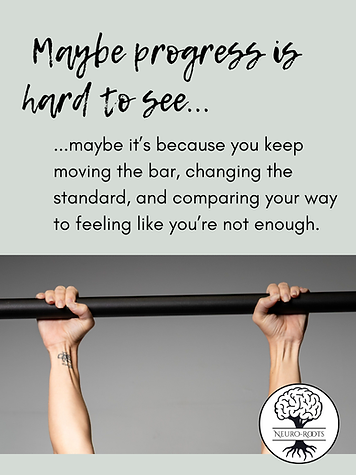
Seeing progress and accomplishment can be downright challenging and may differ depending on both your neurotype and history. While there are really specific ways in which this can affect people, three common areas we continually see friction at exist in the ability to accept progress in the midst of fear, capability to see positive as we work in the middle of a stormy season of life, and in the fundamental way our brains can process accomplishment based on our neurotype.
1) Friction with fear…
Progress can be really challenging to see. We can fear acknowledging it, especially if we have come from a dark place.
· We can worry that when we see it, we may lose motivation to keep going.
· We can also have thoughts that progress will be taken away and something negative will happen.
That doesn’t mean progress isn’t there or that progress will be lost. Sometimes we can also keep ourselves from experiencing, actually feeling, the progress and growth we make. This happens when we keep adding to the goal rather than finishing and then creating another one, moving the finish line or bar as we inch toward it, and continually comparing our wins to other people’s wins. Be real with yourself and practice a little bit of grace in acknowledging the progress you make…no matter the size, timeframe, or amount.
2) Neurodivergence and the brain’s natural set up with goal orientation…
If you are neurodivergent, the end result of task completion and meeting a goal may feel different than your neurotypical counterparts.
· Rather than being super excited or a huge weight lifted or even sometimes a lot of relief, it can feel mid-level, neutral, or just a brief momentary pat on the back or sigh of relief.
· If you are able to feel deeply following an accomplishment, it is highly likely that you may tend to feel relief over excitement.
This is because the pressure of the task is over, managing the environment to get the job done takes a lot more control, you may have experienced a sympathetic nervous system response while engaging in goal completion, and because there are real differences in dopamine regulation in your brain. What happens next is also different…you may just jump into the next goal, to-do list, or task to complete. This is also normal for a neurodivergent brain. It is, however, important to ensure that there is a pause, brief lull, or some kind of rest that allows for regulation and rejuvenation so that you don’t repeat the cycle until you hit burnout. Acknowledging how your brain works and then working with it can make this cycling and experience with goals much more manageable across the span of time.
3) The challenges of seeing positive things in the middle of chaos…
Every single person has storms in their life…and if we look really hard, they also have some blooms. What if we looked harder for the blooms when things got stormy? Just like swinging the pendulum to all positivity all the time isn’t recommended, neither is sitting under a proverbial rain cloud. When you have experienced life changing conditions and deep upset or grief, it can be really difficult to see progress, see the blooms, or reach for positivity. And sometimes, there is a protective element as to why the brain does this. Regardless of the reason, it can rob you of regulation, joy, and connection. Seeing both sides, acknowledging the storm, taking care of yourself in it, and continuing to see when there is a splash of colorful joy whether that be in a flower or otherwise, can help to keep you from swinging too far directly into the eye of the storm.
Bottom line…acknowledge the reasons why your brain may see progress differently and the challenges it may have in pointing it out. Then, take a moment to see the blooms in the storms, acknowledge the progress that is there no matter the amount, and continue to show up for yourself in a way that allows your brain to celebrate how it works with accomplishment.


